Private lessons adapted to learning disorders
ADHD, dyslexia, dyscalculia, autism (ASD), dysorthographia, dysphasia: since mid-2024, nearly 2,000 students supported by My Sherpa have a diagnosed disorder. We know how to help them make progress.
You tell us about your child’s profile. We choose a coach who knows how to adapt to it and give them practical advice for their lessons. All over Belgium, at home or online.
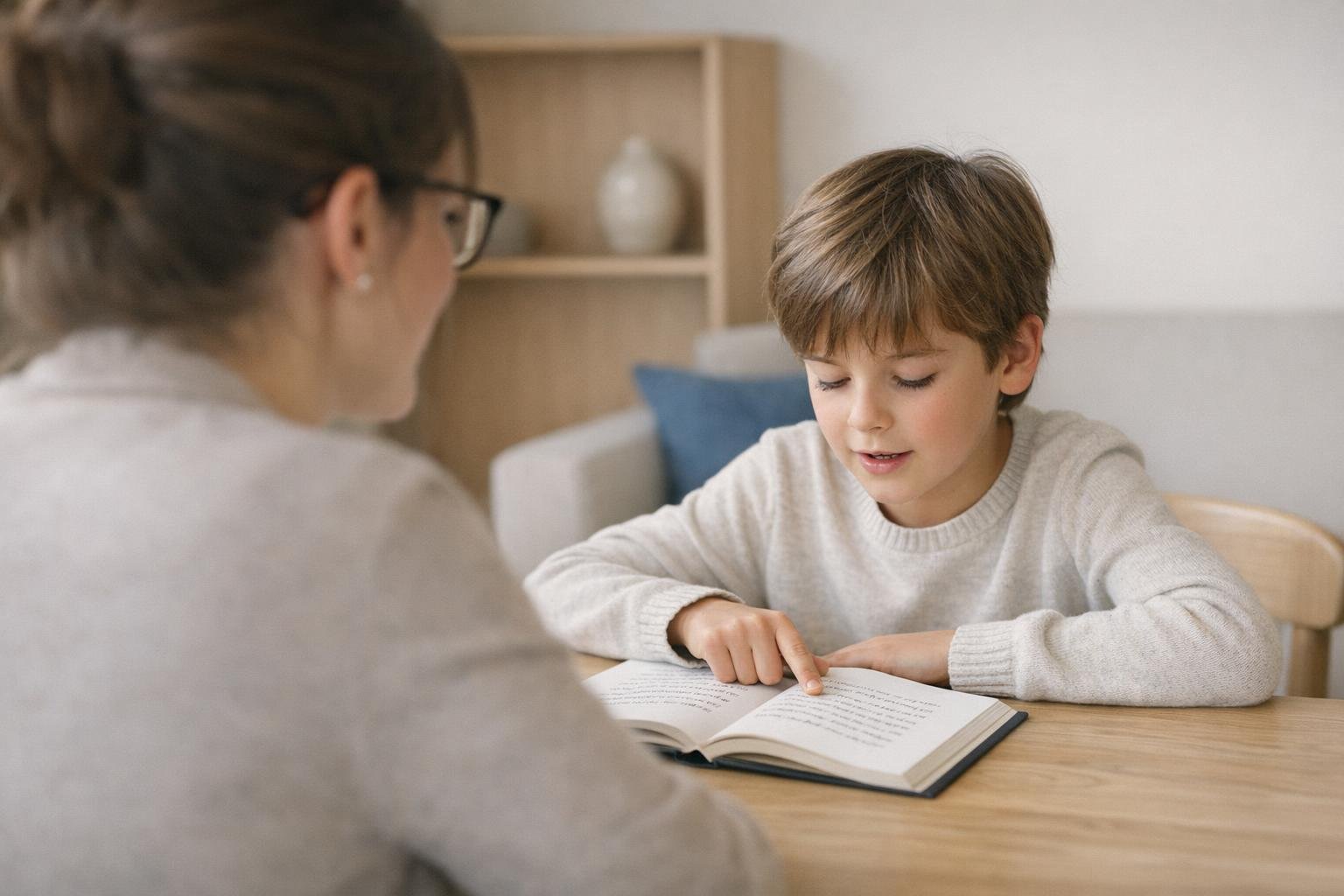

A setting where your child learns their own way
In class, the teacher moves forward for the whole group. In a private lesson, the coach starts from your child: their pace, the way they understand, the moments they get tired.
Your child works on the school material and builds, lesson after lesson, strategies that suit them: breaking a task down, rereading an instruction, checking a calculation, organising their study. They keep these strategies for class and for exams.
When they see they are making progress, confidence comes back. The coach works alongside the speech therapists, neuropsychologists and teachers who already support your child.
What the coach adapts, disorder by disorder
A few examples from the advice our coaches receive. Every child is different: the coach always starts from yours.
ADHD
A clear goal announced at the start of the lesson, short instructions, brief tasks that alternate, a quiet place and the phone put away.
Dyslexia
Important information also given out loud, short sentences, diagrams, and spelling worked on separately when the content is what matters.
Dyscalculia
Every step of a calculation written out, diagrams and everyday examples, time to think, and a coach who checks the reasoning as much as the answer.
Autism (ASD)
A predictable, structured lesson, short and literal instructions, visual aids, a checklist of steps, and time to finish one task before the next.
Dysorthographia
Clear rule sheets, a list of points to check when rereading, plenty of repetition on similar sounds (v and f, d and b), and the computer when handwriting slows them down.
Dysphasia
Simple, calm language, key words noted together before building an answer, and a lesson with a familiar structure so the student knows which questions will come.
High potential, high sensitivity, exam stress: the coach also receives advice for these profiles. Gifted children
Reasonable accommodations, in private lessons too
The school can grant your child reasonable accommodations: extra time, instructions read aloud, enlarged documents, a calculator. Tell your advisor which ones have been granted. The coach works with the same tools, so your child gets used to them before tests and exams.
To better understand your child’s disorder
Our articles explain each disorder, its signs and what helps at home and at school.
Learning disorders: your questions
All other questions are on the page Frequently asked questions.
No. If you notice difficulties with reading, concentration or organisation, tell us too: the coach takes them into account in the lessons. What the coach notices during lessons can help you discuss it with the school or a specialist.
They are academic coaches: they work on the subject and on study methods, adapting their lessons to the student’s profile. Diagnosis and therapy are the work of speech therapists and neuropsychologists. If a specialist supports your child, their recommendations help the coach.
Your educational advisor presents your child’s profile to the coach before the first lesson. For each disorder recorded in the file, the coach has a sheet of practical advice to adapt explanations, pace and exercises.
No, the price is the same as for all our private lessons. See our prices
The first three lessons are a trial: if the relationship doesn’t click, you continue with another coach at no cost. Your advisor talks it through with you and clarifies what to look for in the next one.
Let’s talk about your child
By phone, through the form or by booking an appointment: a My Sherpa educational advisor reviews your child’s profile with you and suggests a suitable coach. No commitment, all over Belgium, from primary school to higher education.



Your child’s profile, taken into account at every step
You tell us once: the information follows your child’s file all the way to their coach.
You let us know
The request form already includes a question on learning disorders: tick your child’s. During the free assessment, you also tell us what is already in place at school or with a specialist.
Your advisor completes the file
They record the diagnosed disorders, and also what you notice day to day: stress, concentration, organisation, understanding instructions. Everything is recorded before we look for a coach, since this is what guides the choice.
A coach chosen and prepared
The advisor chooses the coach according to the subject, the level and your child’s profile. For each disorder recorded in the file, the coach receives a sheet of practical advice. The first three lessons are a trial.
Follow-up that adjusts
Your advisor stays in touch with the coach and with you. If an approach works poorly, the coach tries another; if the relationship doesn’t click, you change coach.